- Home
- Products
- Plastic Film Pelletizing Machine
- Woven Bag Pelletizing Machine
- Rigid Material Pelletizer
- Plastic Bottle Granulator
- Plastic Pelletizing Machine
- Compactor Pelletizing Machine
- Fabric Fiber Recycling Granulator
- PET Flakes Plastic Pelletizer
- Parallel Twin Screw Pelletizer
- Plastic Film Washing Machine
- Agglomerator/Densifier/Compactor
- PVC Pelletizer
- PET Washing Machine
- Plastic Squeezing Pelletizing Machine
- Screen Changer
- Plastic Granule Cutter
- Plastic Accessory Machinery
- Solution
- Applications
- Video
- About Us
- News
- Contact Us
- 20 Years |
- 200+ Employees |
- 10K+ Customers |
- 20K+ ㎡ Area |
- CE


How to Use Polyester Fabric Densifier Machine for Polyester Fabric Waste
Time:2025-08-26
In the R&D and environmental protection recycling sectors of the textile industry, large quantities of polyester fabric waste (such as used clothes and post-industrial scraps) are loose in form and low in density. This not only takes up significant storage space but also fails to meet the needs of small-batch testing, material preprocessing, and other R&D requirements. The Polyester Fabric Densifier Machine emerges as a precise solution for fabric – type waste. With its core advantages of “small – batch processing, high adaptability, and easy operation”, it provides an efficient waste densification solution for R&D institutions and small – scale recycling laboratories, helping to address the challenges of fabric waste handling.
 |
 |
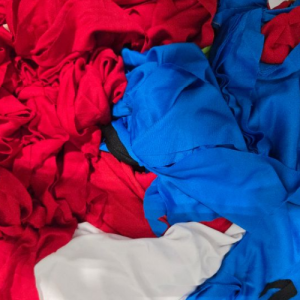 |
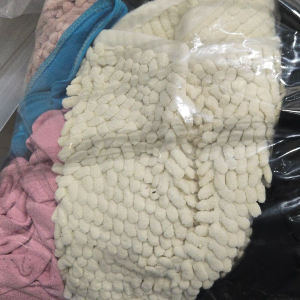
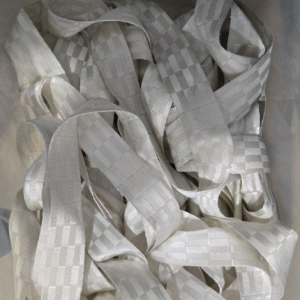
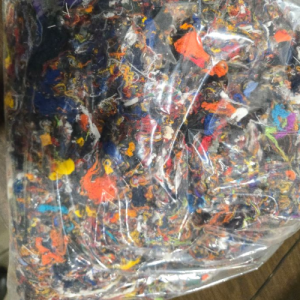
The core value of this system lies in breaking the loose nature of polyester fabric waste (clothes, scraps, cutting pieces, etc.). Through physical or low – temperature hot – melting processes, it converts the waste into uniform – density, stable – form finished products in either “small pallet shape” or “popcorn shape”. On one hand, it can increase the density of fabric waste, which originally ranges from 0.1 to 0.3 g/cm³, to 0.4 to 0.8 g/cm³, reducing storage space occupancy by more than 60%. On the other hand, the standardized finished product forms (such as blocks with a diameter of 5 – 10 cm and granules with a particle size of 3 – 5 mm) can be directly used as raw materials for R&D tests (e.g., preprocessed materials for subsequent melt recycling and composite material preparation). This avoids issues like uneven feeding and inaccurate measurement of loose waste during tests, ensuring the accuracy of R&D data.
 |
 |
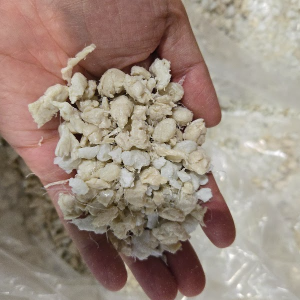 |
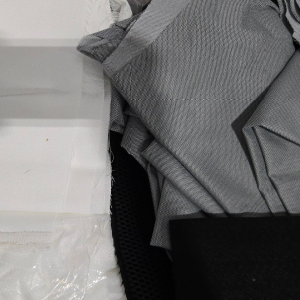
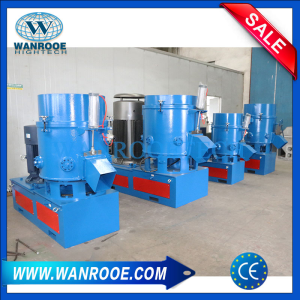
In terms of core functions, the system is highly adaptable to fabric waste processing and flexible R&D needs. It supports the switching between two core finished product forms. By adjusting equipment parameters, it can produce “small pallet – shaped” products (blocks, 10 – 50 g per block, suitable for subsequent cutting and pressing tests) and “popcorn – shaped” products (granules, 3 – 8 mm in particle size, suitable for continuous feeding tests) without replacing core components, meeting the material requirements of different processes in R&D. The feeding port is equipped with an adjustable material guide device, eliminating the need for complex preprocessing of fabric waste (such as thorough crushing). It can directly handle clothing fragments, scraps with a length of ≤ 30 cm, and even polyester waste with a small amount of threads and labels, reducing the material preparation time in the early stage of R&D. It is equipped with a digital control panel that allows real – time adjustment of agglomeration temperature (50 – 120 °C, adapted to the softening point of polyester to avoid material property damage due to high – temperature melting), extrusion pressure (0.3 – 1.2 MPa), and rotation speed (150 – 300 r/min). It supports precise fine – tuning of 1 °C / 0.05 MPa, facilitating R&D personnel to test the impact of different processes on the density and strength of finished products. Additionally, it integrates the entire process modules of “feeding – agglomeration – forming – discharging” and does not require additional supporting equipment; a single machine can complete the processing. At the same time, it has a built – in simple screening device that can remove impurities such as metals and hard plastics mixed in the waste, ensuring the purity of finished products.
 |
In terms of application scenarios, the system focuses on R&D needs and covers various small – scale processing scenarios. In textile R&D institutions, it can be used for polyester fabric recycling and regeneration tests. After densifying used clothes and industrial waste, they can be used as raw materials for melt spinning and modified material preparation, solving the problems of difficult material measurement and unstable feeding in small – batch tests and improving R&D efficiency. In environmental protection laboratories, it can be used for research on the resource utilization of fabric waste (such as biodegradation tests and fuel preprocessing). Converting loose waste into a standardized form makes it easy to control test variables (such as material surface area and reaction contact area) and ensures the repeatability of test data. Small – scale recycling pilot projects can use it to process locally collected used clothes in small batches, test the agglomeration effect of different types of waste (such as cotton – polyester blends and pure polyester), and provide data support for the selection of subsequent large – scale recycling equipment. In university scientific research, it is suitable for teaching and scientific research in majors such as materials science and environmental engineering. It allows students to intuitively observe the densification process of fabric waste and meets the material processing needs of small – scale scientific research projects.
In terms of key technical parameters, the system is precisely adapted to R&D scenario requirements. The processing capacity is 5 – 20 kg/h, which can be adjusted according to the bulkiness of the waste; for pure polyester waste, the processing capacity can reach 20 kg/h. It is suitable for polyester fabric waste (clothes, scraps, cutting pieces) and supports a small amount of blending (cotton content ≤ 30%). The finished product forms include small pallet shape (5 – 10 cm in diameter, 10 – 50 g per block) and popcorn shape (3 – 8 mm in particle size), and the mold can be quickly replaced. The agglomeration temperature is 50 – 120 °C (digitally adjustable with an accuracy of ± 1 °C), adapted to the softening characteristics of polyester to avoid melting. The working pressure is 0.3 – 1.2 MPa (adjustable), which is the twin – screw extrusion pressure and affects the density of finished products. The motor power is 3 – 5 kW (220 V/380 V optional), suitable for common laboratory voltages. The equipment size is 1200 × 800 × 1500 mm (length × width × height), covering an area of approximately 1.2 – 1.8 m². The finished product density is 0.4 – 0.8 g/cm³, which is 2 – 3 times higher than that of the original waste. The control method is dual control of touch screen and physical buttons, supporting parameter storage (10 groups of process parameters can be saved).
This small – scale dedicated agglomerator for fabric waste is not only a processing equipment but also an “auxiliary tool” for textile R&D and environmental protection research. With its high adaptability to fabric waste and high flexibility to R&D needs, it solves the pain point of small – batch fabric waste densification and provides a stable and standardized material foundation for subsequent regeneration tests and process verification.
If you need to adjust parameters according to specific waste characteristics (such as blending ratio and waste thickness) or learn about actual operation cases, please feel free to communicate, and we will provide a more precise adaptation plan.
Leave a Reply